AgentDoggo Playground
A cross-platform desktop playground for running and inspecting AI agents — making prompts, context, tool calls, and permissions visible.
Joshua VARGAS2026
Project Name
Project Date
Affiliation
Team
Joshua's Contribution
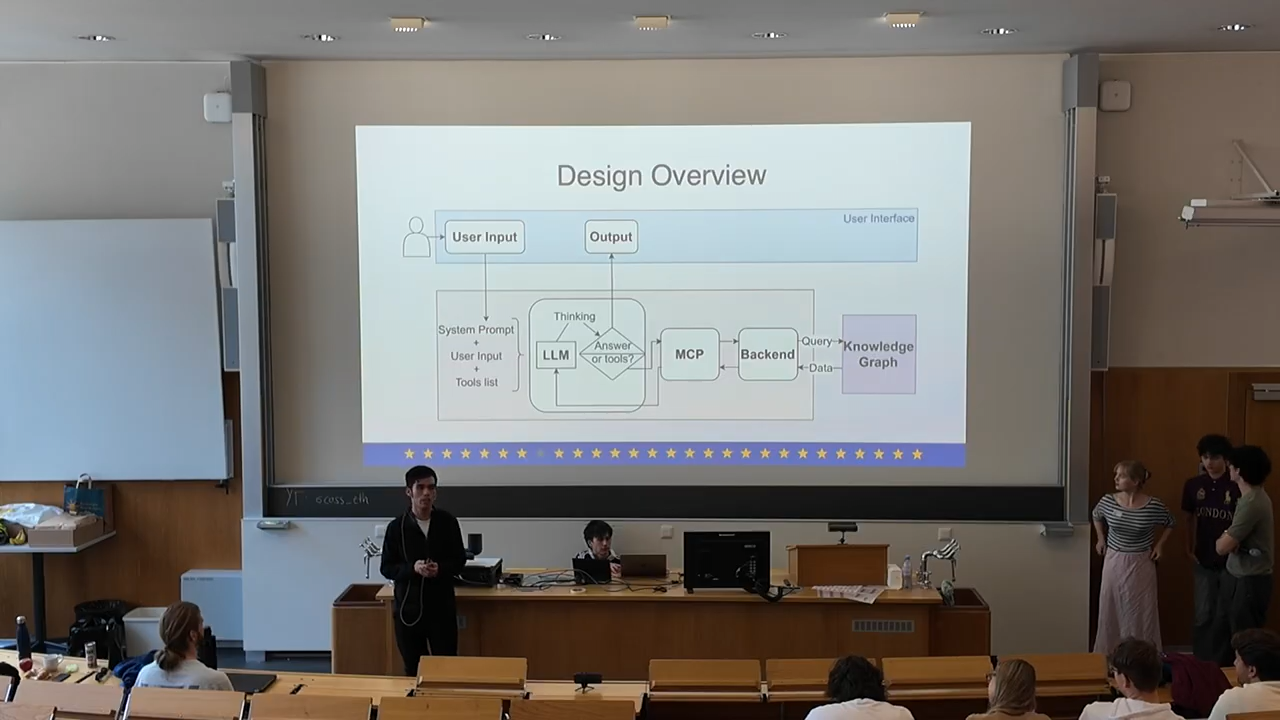
Developed for ETH Zürich’s “Hacking Democracy” hackathon, EU-Daemon explores how emerging technologies can help journalists and researchers investigate lobbying. The prototype uses a swarm of language-model agents to map the EU Transparency Register and other public databases into a Neo4j knowledge graph, making connections between organisations, politicians, and legislation easier to explore. By querying structured relationships, users can investigate leads without asking a language model to repeatedly read large collections of source documents. The approach aims to reduce manual verification and the risk of hallucinated connections, while using less energy; both claims need further evaluation. The team also identified verification and the integration of additional datasets as key areas for future work.
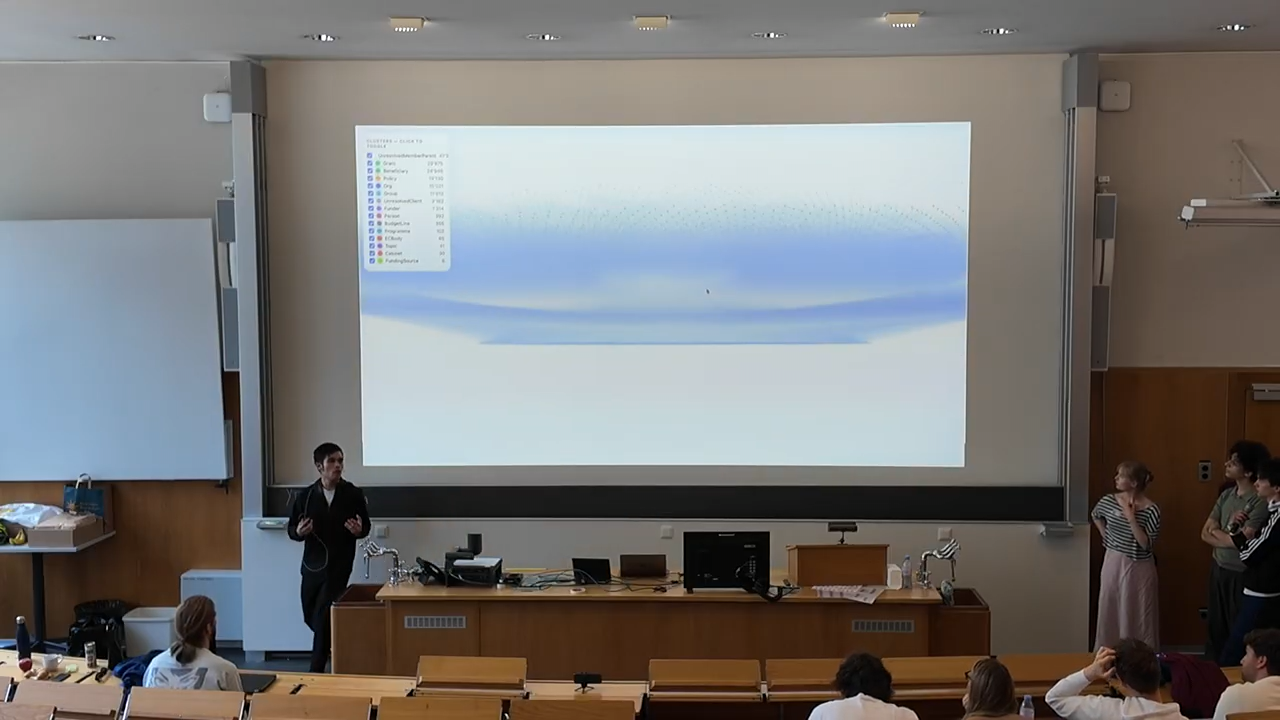
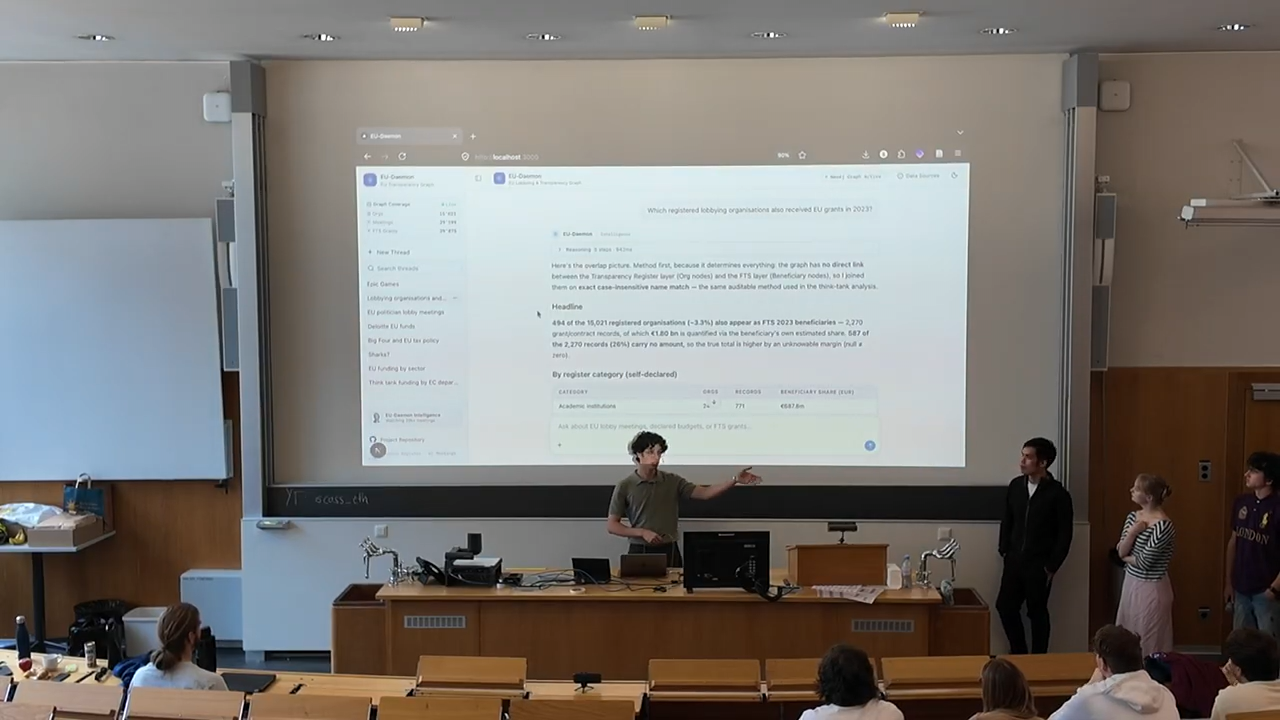
For ETH Zürich’s “Hacking Democracy” hackathon, our team explored how emerging technologies could help journalists and researchers investigate lobbying. We built a prototype that maps the EU Transparency Register and other publicly available databases into a knowledge graph, helping users follow connections between lobbying organisations, politicians, and the laws they pass.
A swarm of language-model agents helps organise source material and populate the Neo4j graph. Journalists, researchers, and agentic AI systems can then query those structured relationships directly instead of asking a model to reread thousands of documents for every question. This approach is intended to make investigation faster, reduce unsupported connections, and use less energy. Its accuracy and energy use still need systematic verification, as does the process of adding further datasets.
“Hacking Democracy” brings students from different disciplines together to prototype open-source tools for civic engagement, deliberation, and transparency. The hackathon introduces participatory methods such as citizens’ assemblies and participatory budgeting, then asks teams to apply them to a challenge related to participatory democracy.
Through iterative design, development, and testing, teams explore how technology can support more inclusive and effective collective decision-making. EU-Daemon was our team’s prototype for investigating transparency and lobbying data.
Click on an image to expand it.
Tap on a photo to expand it.
code + design + sound © 2026 joshua vargas