To Make Global South Children See Cities through SimCity
Global Undergraduate Awards-winning paper analysing the implications of SimCity’s influence on global south children.
Yale-NUS College2021
Project Name
Project Date
Affiliation
Team
Joshua's Contribution
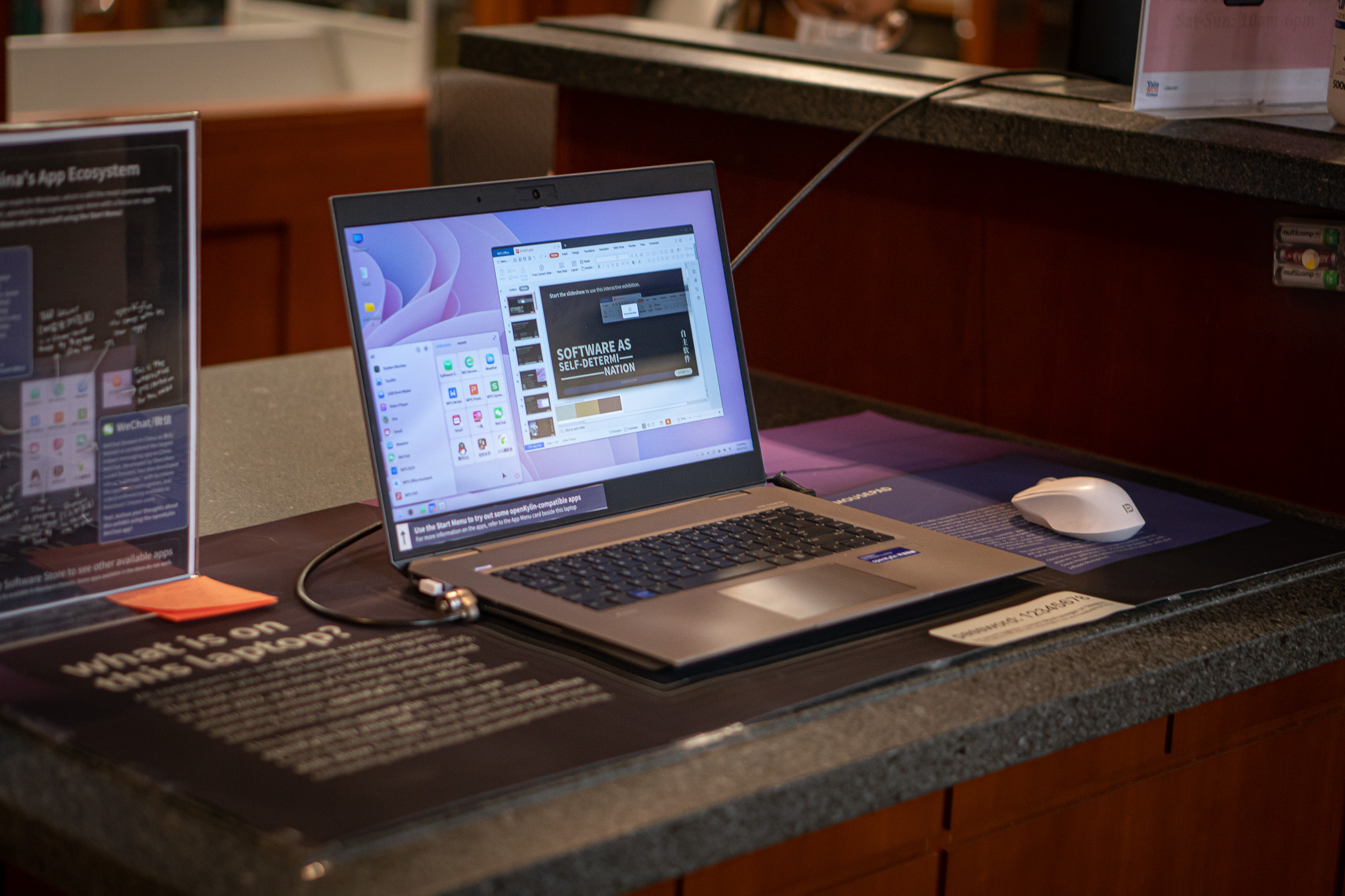
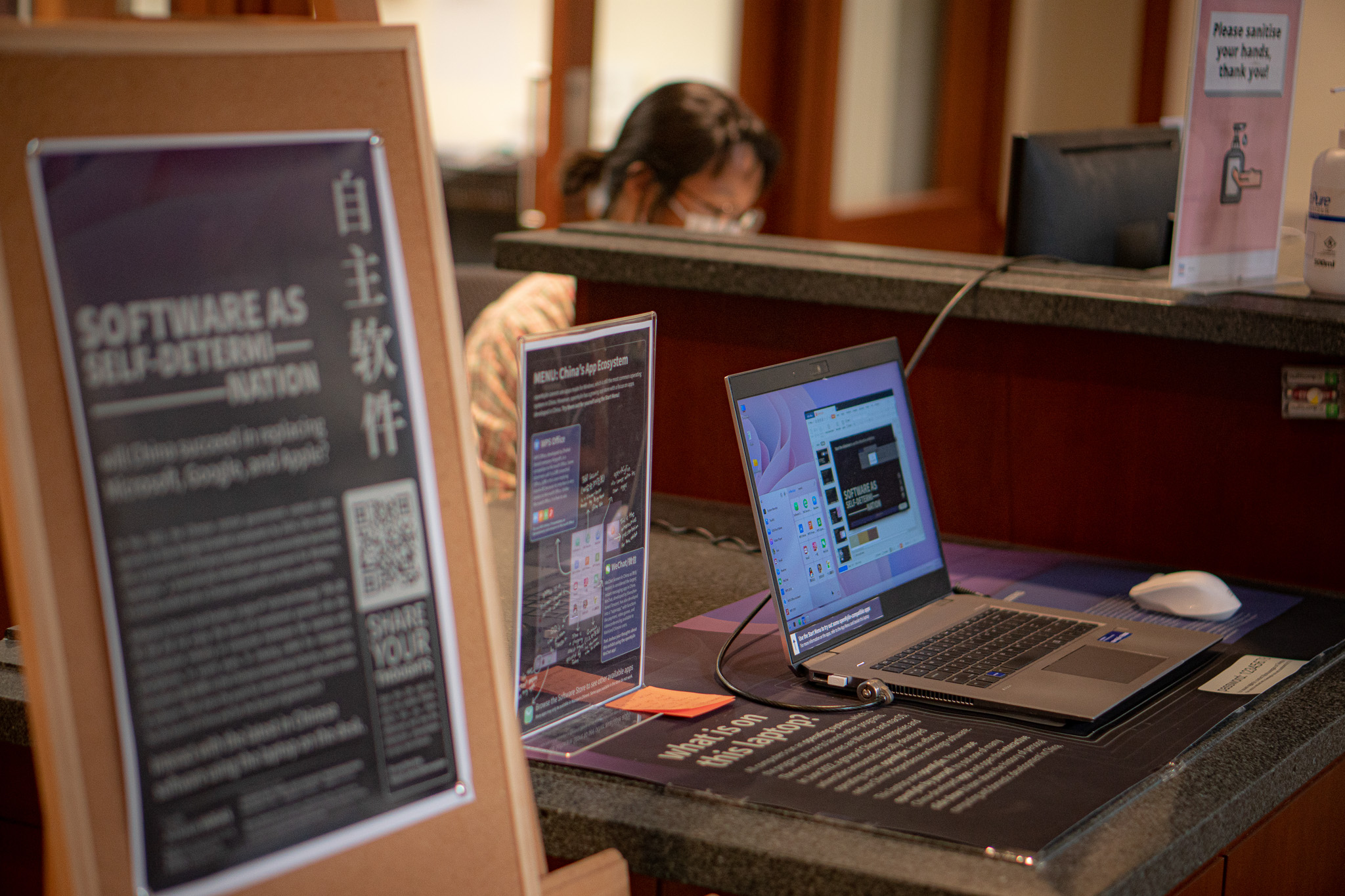
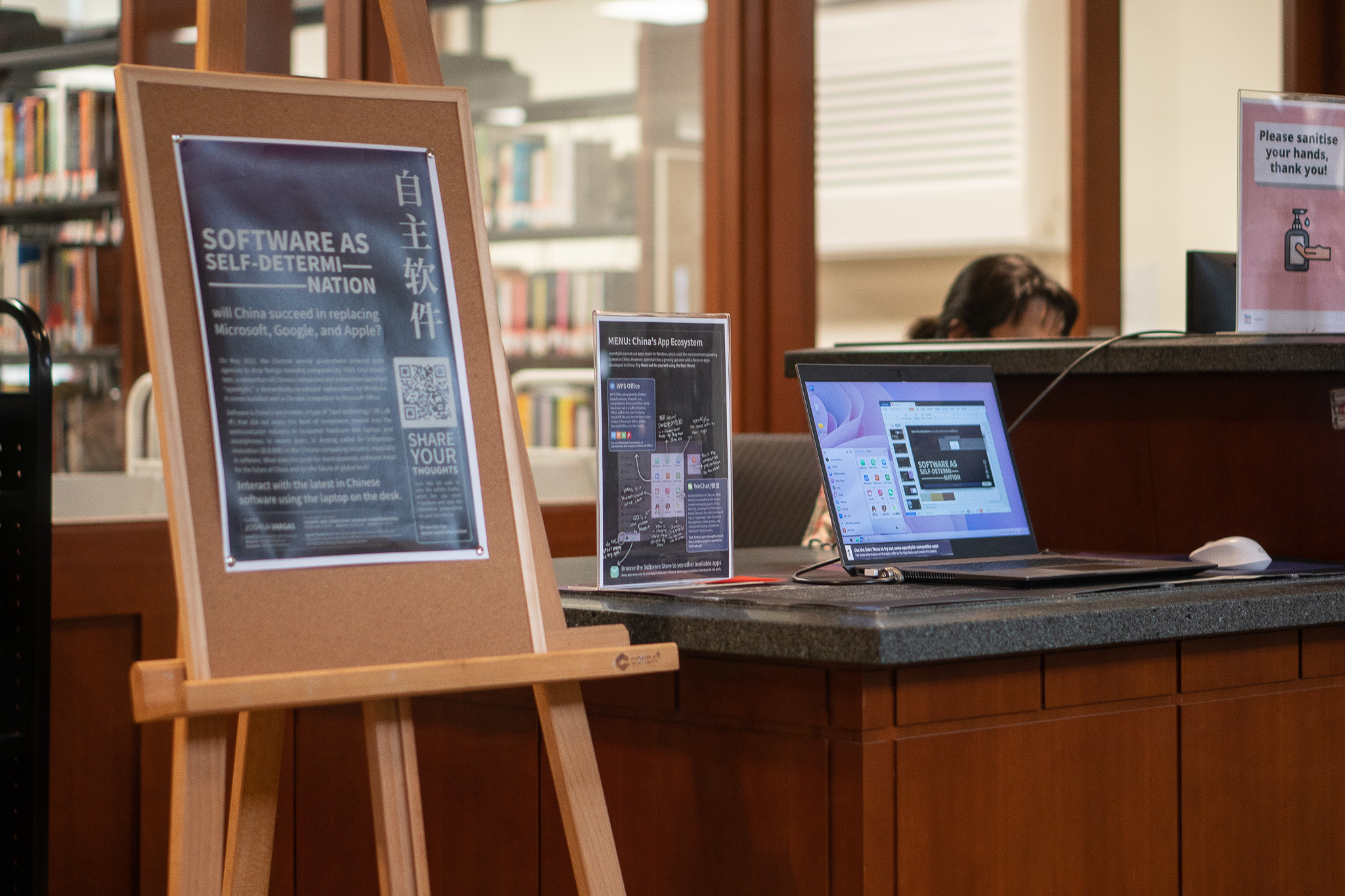
自主軟件 (Software as Self-Determination) was an interactive exhibit at the Yale-NUS College Library in 2022, curated by Joshua VARGAS. The main piece of the exhibit is a laptop running openKylin, enabling users to interact with Chinese-developed desktop software – a rarity even among Chinese consumers, who regularly use domestically-developed mobile superapps like WeChat but not desktop operating systems. There is also an interactive exhibition, developed entirely within WPS Office (a Chinese-developed Microsoft Office replacement), enabling visitors to learn about the history of computing in China. The exhibition hopes to critically investigate China’s attempts to produce ‘indigenous innovation’ in software, while challenging outdated Western notions of China’s chronic dependence on foreign technologies.
“Indigenous innovation is just a nationalist parlor trick.” – Xiaowei Wang in Blockchain Chicken Farm (2020)
On May 2022, the Chinese central government ordered state agencies to drop foreign-branded computers and foreign-branded computer software by 2024. (The Business Times). The move is estimated to replace over 50,000 computers “on a central-government level alone.” One month later, a consortium of Chinese companies and universities launched "openKylin" (开放麒麟) a domestically-developed operating system, in an affirmation of China’s ambition to create a strong domestically-produced operating system (Mann).
An operating system is in short the program used to launch your other programs. The most popular ones for desktop and laptop computers are Windows and macOS. Both of those are American products associated with Silicon Valley’s global dominance. Windows in particular became very popular in China even before 1996, when a localized edition of Windows 95 was launched for the first time in front of Beijing’s Forbidden City. (Microsoft Launches Chinese Windows 95).
China’s computing history started with Soviet technical assistance (Russian Virtual Computer Museum). After the Sino-Soviet split, China pursued a policy of isolationism and indigenous computing technology development. But this changed during the Reform and Opening Up era (改革开放). Hoping to emulate the industrial policies of the Asian Tiger Economies (Hong Kong, Singapore, Taiwan, and South Korea), China started attracting foreign companies, requiring technology transfer agreements in exchange for access to an enormous emerging market (Kraemer and Dedrick). Today, China is a very important market as well as a research and manufacturing centre for computing. In recent years, however, China’s openness was strained by the fallout from the US-China trade war.
China is now investing an unprecedented volume of resources into building domestic hardware, building the Sunway TaihuLight supercomputer entirely out of domestic semiconductor designs (Feldman), achieving semiconductor precision comparable to American giant Intel (Pan) and achieving breakthroughs in quantum computing unmatched by the West (Hemsoth). However, software has long been a pain point for China. The original Kylin, an operating system developed by the National University of Defense Technology, was found to have been plagiarized from the UC Berkeley-originated FreeBSD, leading to embarrassment in front of the global IT scene (Dancefire; People’s Daily Online).
Software is China's last frontier, a type of "core technology" (核心技术) that did not enjoy the level of investment poured into the semiconductor industry or consumer hardware like laptops and smartphones. In 2016, Xi Jinping gave a speech at the Work Conference for Cybersecurity and Informatization, where he declared that cybersecurity is the “most important element” (重头戏) of the 13th Five-Year Plan (Xi). He called for domestic investment into core technologies, which include not only “killer” (杀手锏技术) and advanced technologies but also common technologies (通用技术). He called for a reliance on indigenous innovation (自主创新), including in the area of software. What does the push for more domestic software mean for the future of China and the future of global tech? And is this really a turn to a new nationalistic agenda under Xi, or is there a broader pattern in Chinese computing history ignored by many foreign commentators?
My project is an exhibition with this laptop and Chinese software. It includes an interactive presentation on the openKylin project and the history of computing in China, as well as apps from the openKylin store that users can try. To outsiders, the development of computing in China is often poorly understood because of how foreign it is. I hope to invite you all to cross that boundary, to use it, interact with it, and reflect not only on the progress that Chinese software needs to make, but also on the progress already made and what a potential ‘tech arms race’ could look like for everyday consumers.
There is also an exhibition Padlet meant for audiences to submit their reflections for public discussion. I wanted to have a feature where users could send me their thoughts about the exhibit on WeChat, but our test account was unfortunately shut down by Tencent during the first day of the exhibit’s operation.
Click on an image to expand it.
Tap on a photo to expand it.
code + design + sound © 2026 joshua vargas